

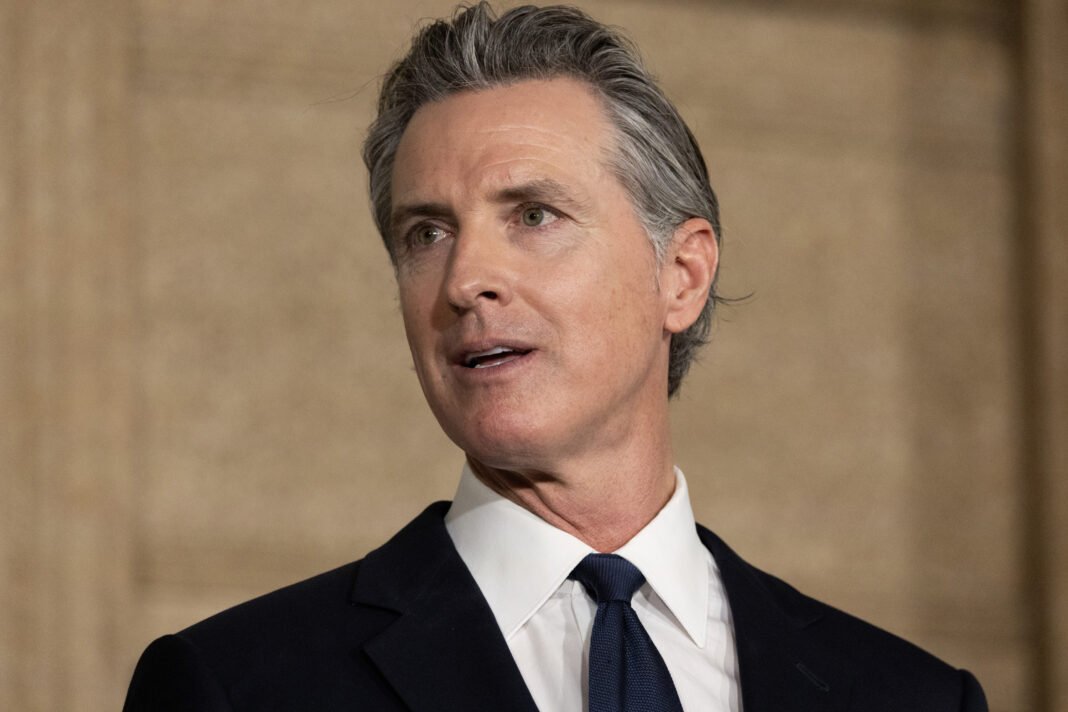


Gavin Newsom’s 2028 presidential ambitions are about to face a self-imposed stress test. After months of flexing his political muscle behind one of the Democratic Party’s boldest campaigns of 2025, California voters will decide on Nov. 4 whether to embrace his most controversial gamble yet a radical reshaping of how the state’s congressional districts are drawn.
At the center of the battle is Proposition 50, a Newsom-backed ballot initiative that would allow the California Legislature to redraw the state’s 52 congressional districts through 2030 potentially creating up to five new Democratic-leaning seats ahead of the 2026 midterms. The measure would also dismantle the state’s nonpartisan redistricting commission, established by voters in 2010, and restore the mapmaking power to elected officials.
For Newsom, 58, the stakes stretch far beyond redistricting. The second-term California governor has cast the campaign as both a political necessity and a personal proving ground a “heavyweight counterpunch,” as allies describe it, to President Donald Trump’s efforts to reshape congressional maps in Republican-led states from Texas to Indiana.
“The meaning of a win in California is huge for Democrats in 2026,” said Sean Clegg, a senior Newsom strategist. “And obviously, it’s a monumental political win for the governor.”
Newsom’s wager comes as Democrats look to claw back power in Washington ahead of the 2026 midterms and as the governor maneuvers through a crowded shadow primary field for the 2028 Democratic nomination. His rivals could include figures such as former Vice President Kamala Harris, who has remained largely off the 2025 campaign trail while promoting a memoir about her 2024 loss to Trump, and Pennsylvania Gov. Josh Shapiro, who faces a crucial reelection fight next year.
“It’s not just about California,” said a confidant close to Newsom who requested anonymity to speak freely. “He’s trying to prove he can set the tone for Democrats nationally to show that he can go toe-to-toe with Trump and win.”
In interviews and public appearances, Newsom has positioned the initiative as a referendum on Trump’s America.
“I can’t take what’s going on no bull—-,” Newsom said during an Oct. 25 appearance on All the Smoke, a podcast hosted by former NBA players Matt Barnes and Stephen Jackson. “It’s not even about Dems versus Republicans. It’s about this country and what we stand for. They’re literally putting America in reverse.”
So far, Newsom’s gamble appears to be paying off. An Emerson College poll released Oct. 24 shows 57% of likely voters in favor of Proposition 50, compared with 37% opposed and 6% undecided a comfortable double-digit lead as the campaign enters its final stretch.
But that momentum comes with a steep cost. The ballot initiative is projected to cost taxpayers $282.6 million, according to state estimates. Political analysts warn that a narrow victory could undercut Newsom’s image as a national powerhouse.
“If the results are close, that doesn’t play well for Gavin Newsom either,” said Brian Sobel, a longtime San Francisco Bay Area political analyst. “Even a low double-digit win reflects poorly. But if it’s a runaway win, that’s another feather in his cap.”
Newsom has spared no effort in turning the initiative into a national campaign. His team has enlisted a who’s who of Democratic heavyweights including Barack Obama, Nancy Pelosi, Alexandria Ocasio-Cortez, and Sen. Chris Murphy to rally support.
“I think every single state run by Democrats should be using every amount of leverage they have,” Murphy said. “We didn’t start this, but we can’t unilaterally disarm.”
The initiative’s supporters have raised $127.5 million, outpacing the opposition’s $78 million, according to state data. Obama appears in a television ad urging Californians to vote “Yes on 50,” describing it as a way to “protect democracy from those trying to rig the system.”
For Newsom, the effort is also a test of his ability to unite a fractious Democratic coalition from establishment figures to progressives skeptical of his centrist pragmatism. “This campaign shows Gavin can bring different factions together,” said one aide. “He’s showing he can lead the national fight against Trump.”
Newsom’s redistricting battle comes as Democratic-led states follow his lead in pushing back against GOP-drawn maps. In Virginia, lawmakers this month approved a constitutional amendment to redraw congressional districts in a bid to add two or three Democratic seats. In Illinois, Gov. J.B. Pritzker confirmed he’s discussing similar efforts with state legislators.
“This is all about the fact that Donald Trump is now trying to rig the game,” Pritzker said.
Maryland Gov. Wes Moore called the fight over maps “political redlining” though internal divisions have slowed his push.
Even so, Newsom’s initiative remains the most visible and politically consequential of the bunch, widely viewed as an early demonstration of his national influence ahead of 2028.
Republicans and some Democrats have blasted Proposition 50 as a cynical power grab masquerading as reform.
Jessica Millan Patterson, former chair of the California GOP and leader of the “No on 50” campaign, said voters established the independent commission to prevent politicians from choosing their own constituents.
“To say that this is a power grab is an understatement,” Patterson said. “It’s nothing more than a stepping stone for Gavin Newsom to run for president.”
In October found 53% of California voters approve of Newsom’s job performance, compared to 47% who disapprove. Yet among Proposition 50 opponents, 51% said their main reason for voting “no” was Newsom himself.
Even some progressives have doubts. Adam Green, cofounder of the Progressive Change Campaign Committee, said Newsom’s brand lacks the authenticity of an “outsider” movement.
“Today’s politics are not about left versus right,” Green said. “They’re about outsider rage versus creatures of the inside.”
Newsom’s team has tried to soften criticism by emphasizing that Proposition 50 includes a sunset clause — restoring the citizen-led redistricting process after the 2030 census. The governor argues the measure is a temporary safeguard to prevent Republicans from “gaming the system” before Democrats can retake the U.S. House.
Democrats such as Sen. Andy Kim of New Jersey and Gov. Andy Beshear of Kentucky have voiced mixed feelings, saying they dislike the idea in principle but see it as necessary political retaliation.
“Until we can pass anti-gerrymandering legislation, I don’t believe in unilateral disarmament,” said Sen. Ruben Gallego of Arizona.
For now, Newsom’s presidential ambitions remain unofficial. But he is expected to make a campaign announcement soon after the 2026 midterms timing that could position him as the architect of a Democratic comeback if Proposition 50 helps flip the House blue.
The outcome of this ballot initiative could determine more than California’s congressional map. It could define whether Gavin Newsom is viewed as the Democratic savior who fought Trump’s second-term dominance or as an ambitious insider who overplayed his hand.
Either way, the Nov. 4 vote will be the clearest test yet of whether the California governor’s political calculus can carry him beyond Sacramento and all the way to the White House.