

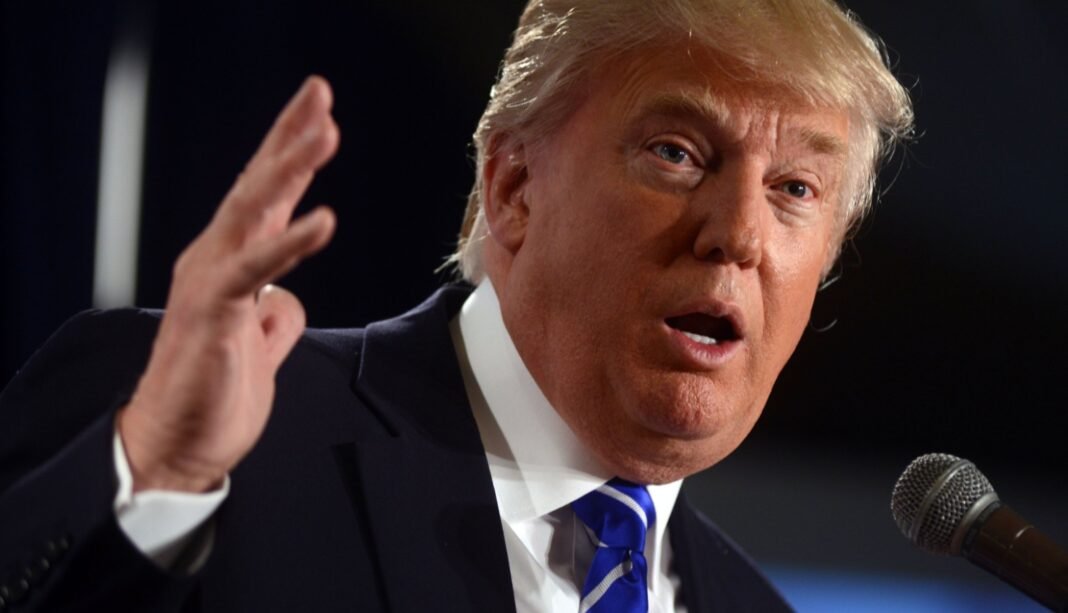


President Donald Trump announced that he will not attend the U.S. Supreme Court’s upcoming oral arguments on the legality of his sweeping tariffs on foreign imports, a case that could have major implications for executive power and U.S. trade policy.
The high court is set to hear arguments on Tuesday, Nov. 5, in a closely watched case challenging whether Trump exceeded his presidential authority when he used emergency powers to impose tariffs on goods from multiple countries. Trump had previously hinted that he might make history as the first sitting president to attend a Supreme Court hearing, citing the case’s extraordinary importance.
However, in comments made aboard Air Force One on Nov. 2, Trump said he ultimately decided against appearing before the justices, expressing concern that his presence could overshadow the proceedings.
“I will not be going to the Court on Wednesday in that I do not want to distract from the importance of this Decision,” Trump wrote in a social media post the same day. “It will be, in my opinion, one of the most important and consequential Decisions ever made by the United States Supreme Court.”
Donald Trump’s tariffs, implemented under the 1977 International Emergency Economic Powers Act (IEEPA), have become a cornerstone of his economic agenda. The administration argues the move was necessary to protect national security and strengthen domestic manufacturing.
The tariffs, which target a range of imports from steel to electronics, are projected to generate $4 trillion in revenue for the federal government over the next decade, according to White House estimates. Officials claim the policy has encouraged both foreign governments and multinational corporations to negotiate trade deals with the U.S. and expand manufacturing within the country.
Critics, however, contend that the IEEPA was never meant to grant presidents the sweeping trade authority Trump has asserted. Lower courts have sided with that view, ruling that Trump overstepped his legal powers by invoking an emergency statute traditionally used for economic sanctions against hostile foreign actors, not broad trade restrictions on allies.
The Supreme Court’s decision could reshape how much unilateral control presidents have over international trade and economic sanctions. A ruling in Trump’s favor would cement his ability and that of future presidents to use emergency powers to bypass Congress on trade policy. A ruling against him could limit executive authority and force a major recalibration of U.S. trade policy.
Economists and business leaders are watching closely. Supporters of Trump’s approach credit the tariffs with boosting U.S. manufacturing investment and job creation. Opponents warn that maintaining such tariffs could strain relations with key trading partners and raise consumer prices at home.
While Donald Trump will not personally attend the hearing, his decision underscores the gravity of the case for his administration. The president’s legal team, led by the U.S. Solicitor General’s Office, will argue that the tariffs were a lawful exercise of presidential authority in response to what the administration characterizes as global trade imbalances threatening national security.
The Supreme Court’s ruling, expected early next year, could mark a defining moment in Trump’s second term testing the boundaries of presidential power and potentially reshaping the nation’s approach to global trade for years to come.