

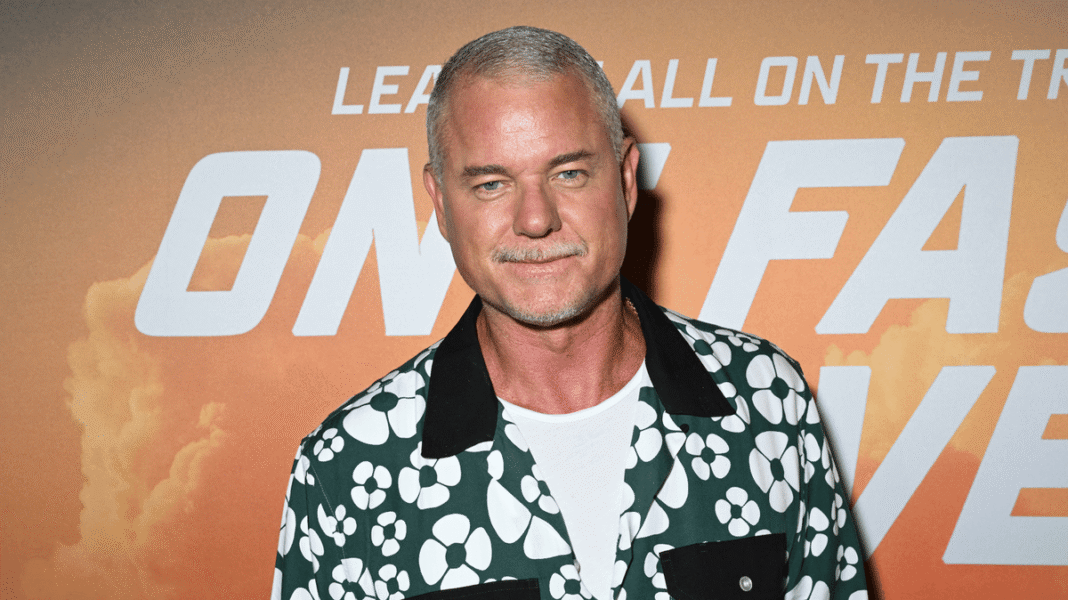


Eric Dane candidly reflected on his long battle with drug addiction, his journey toward recovery and his later return to medication following his ALS diagnosis in his posthumous memoir, My Book of Days, published Tuesday, November 3.
The actor, best known for his role in Grey’s Anatomy, shared deeply personal details about his early experiences with heroin, describing the first time he tried the drug in the early 1990s. “The first time I do heroin, I throw up all over the place,” Eric Dane wrote, recalling the experience as an overwhelming physical reaction. Despite the severe effects, he described the moment as an unforgettable experience.
Eric Dane explained that he was introduced to heroin, which he referred to as “smack,” by a friend named Dante. Initially, he convinced himself that he could use the drug cautiously and maintain control over his habits. He believed he and his friends were being responsible because they were using heroin in private apartments rather than living on the streets.
“We don’t shoot the s***. We’re safe,” Dane wrote. He further recalled how they considered themselves careful users, believing they were different from people struggling with severe addiction. However, his confidence in his ability to control his drug use gradually disappeared as his addiction progressed.
Eventually, Eric Dane became increasingly familiar with injecting heroin, describing himself as having become “proficient” at the practice. By 1997, after approximately five years of using heroin, he managed to wean himself off the drug. However, his struggle with substance abuse did not end there, as he soon developed a dependence on prescription painkillers.
Eric Dane traced his introduction to painkillers to a sinus surgery, after which he was prescribed medication for recovery. However, he quickly began taking significantly more than the recommended amount. Recalling the prescription instructions, he wrote that the doctor had advised six pills a day, with a maximum of 12, but he was taking as many as 40. He also developed a preference for Percocet, explaining that it provided a high similar to heroin without the same physical discomfort.
His dependence eventually pushed him into increasingly desperate situations. In one particularly disturbing incident, Dane recalled visiting an emergency room because he wanted access to more medication. When the doctor briefly left the room, he began searching through the drawers and took a handful of syringes, placing them in his pocket.
After returning, the doctor suggested that Eric Dane remain in the hospital for a seven-day detoxification programme. However, the actor refused the recommendation and quickly left the hospital, where his friends were waiting for him. Once he returned home, his friends discovered that he still had some heroin left and had stolen syringes from the hospital. Their discovery prompted another conversation about his addiction and the need for professional treatment.
With his friends’ support, Dane eventually agreed to return to the emergency room and seek help. However, his determination to leave continued even after the detoxification process began. He attempted to escape shortly after being admitted, prompting his friends and medical professionals to take further steps to ensure his safety.
Eric Dane was subsequently transferred to a mental health facility near Cedars-Sinai Medical Center, where he underwent a psychiatric evaluation. In his memoir, he described gradually understanding that his friends had arranged for him to be placed under a 72-hour involuntary psychiatric hold, commonly known as a 5150 hold in California.
“I comprehend that my friends have 5150’d me,” he wrote. He recalled hearing their voices and noticing them signing documents before realizing they were allowing the hospital to keep him under medical supervision. Although he initially struggled to accept the situation, doctors eventually determined that he needed additional time to recover.
Despite his initial protests, Eric Dane acknowledged the seriousness of his addiction and agreed to enter a state-sponsored rehabilitation facility. He remained there for 88 days, beginning a longer journey toward overcoming his dependence on drugs.
Reflecting on the experience, Dane wrote that he eventually stopped using drugs after five years because he genuinely believed his addiction would kill him. He described reaching an extremely dangerous point in his life, recognizing that continuing down the same path could have fatal consequences.
However, his relationship with medication later changed dramatically following his diagnosis with amyotrophic lateral sclerosis (ALS) in 2024. Referring to the medications he began taking to manage the disease, Dane reflected on the irony of returning to drugs after spending years fighting addiction.
“The irony? I’ve come full circle. I’m back on drugs,” he wrote. He clarified that the medication he was taking after his ALS diagnosis served a completely different purpose, helping him manage the progressive neurological disease.
“These drugs are saving me. … Previously a necessary evil, drugs are now an essential good,” Dane explained, highlighting how medication had shifted from something that threatened his life to something essential for his health and well-being.
Dane publicly revealed his ALS diagnosis in April 2025. The progressive disease affects nerve cells responsible for controlling voluntary muscle movements and can gradually impact a person’s ability to walk, speak, eat and breathe. His memoir offers a deeply personal account of the challenges he faced during his final years, alongside the struggles that shaped much of his earlier life.
The actor died in February 2026 at the age of 53, less than a year after publicly sharing his diagnosis. He is survived by his two daughters, Billie, 16, and Georgia, 14, whom he shared with his former wife, Rebecca Gayheart.
Through My Book of Days, Dane leaves behind an intimate account of his experiences with addiction, recovery, family life and his battle with ALS. His posthumous memoir is now available to readers.