

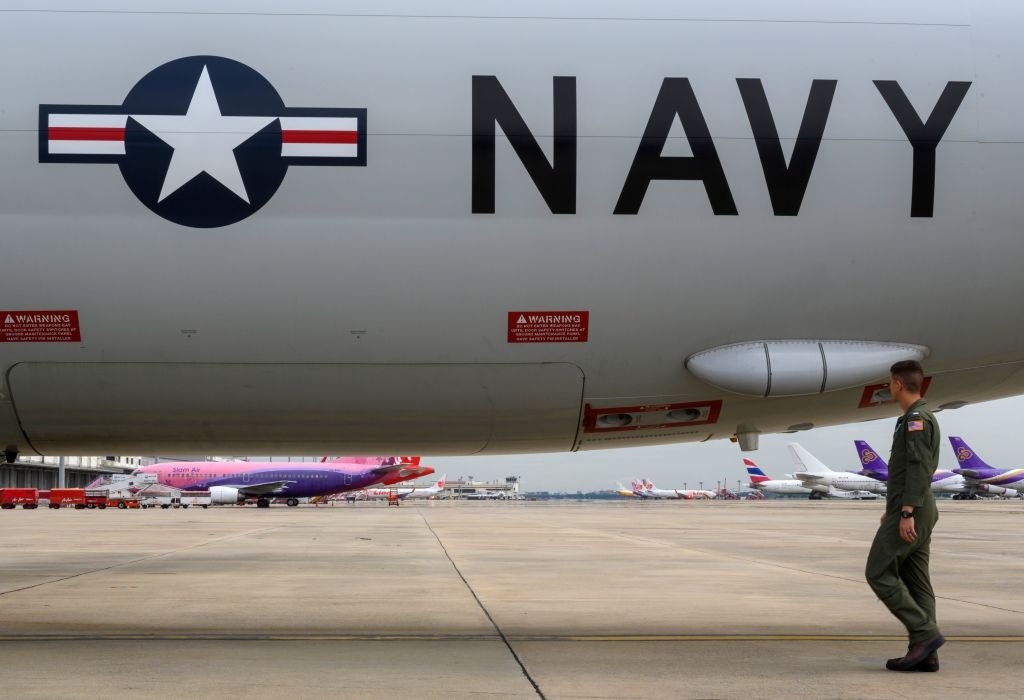


A U.S. military surveillance drone carried out an unusually long mission along the coast of Cuba on April 16, according to flight-tracking data, marking a rare and closely watched development in the Caribbean region.
The aircraft, identified as an MQ-4C Triton operated by the U.S. Navy and using the call sign BLKCAT6, departed from a naval base in Jacksonville, Florida, and flew along Cuba’s southern coastline for more than six hours. Data from Flightradar24 showed the drone entering holding patterns near Santiago de Cuba before moving west and circling again near Havana, then returning to the United States.
Flight-tracking experts said the pattern of movement strongly suggests a surveillance and reconnaissance mission. The drone reportedly spent nearly two hours loitering roughly 40 miles off the coast near Santiago de Cuba, before traveling along the coastline and repeating a similar maneuver about 28 miles off Havana.
Ian Petchenik, a spokesperson for Flightradar24, noted that while such drones are frequently tracked over global conflict zones, including the Black Sea and the Persian Gulf, sightings so close to Cuba are highly unusual. He said it was the first time he could recall tracking this type of advanced U.S. surveillance aircraft operating in such proximity to the island.
U.S. Southern Command declined to comment on the specific mission. In a brief statement, a spokesperson said the military does not discuss ongoing or future operations due to operational security concerns.
The MQ-4C Triton is one of the U.S. military’s most advanced unmanned aerial systems. Designed for long-endurance maritime surveillance, it can operate at altitudes exceeding 50,000 feet for more than 24 hours and has a range of approximately 7,400 nautical miles. The aircraft is primarily used to gather intelligence, monitor maritime activity, and support strategic operations over vast areas.
The timing of the drone flight comes amid increasing tensions between the United States and Cuba. The administration of President Donald Trump has intensified economic and political pressure on the island, tightening sanctions, restricting oil shipments, and threatening penalties against countries that continue to supply energy to Cuba. The island nation, already facing a deep economic crisis, has been further strained by these measures.
Recent remarks by Trump have added to the uncertainty. He suggested that the United States could take significant action regarding Cuba, stating he expects to have the “honor” of dealing with the country “in some form,” comments that have fueled speculation about potential intervention scenarios.
At the same time, reports indicate that U.S. military planning for a possible operation in Cuba has been quietly increasing, although no official confirmation has been provided.
The drone activity also reflects a broader rise in the use of unmanned aircraft by the U.S. military across Latin America and the Caribbean. Over the past year, such systems have been deployed for surveillance missions and counternarcotics operations. In some cases, MQ-9 Reaper drones have been used to strike suspected drug-trafficking vessels in regional waters.
Similar MQ-4C Triton missions have also been tracked near Venezuela, including a lengthy reconnaissance flight earlier this year launched from the same Jacksonville base.
Petchenik emphasized that these drones are typically deployed wherever the United States requires persistent intelligence gathering. Their presence near Cuba, however, stands out due to the island’s sensitive geopolitical position and the current state of relations between Washington and Havana.
The exact objective of the April 16 mission remains unclear, but analysts say it was most likely focused on surveillance. The aircraft exited the area at approximately 6:22 p.m. Eastern Time, concluding a flight that has drawn attention for both its duration and its location near one of the region’s most politically sensitive areas.