

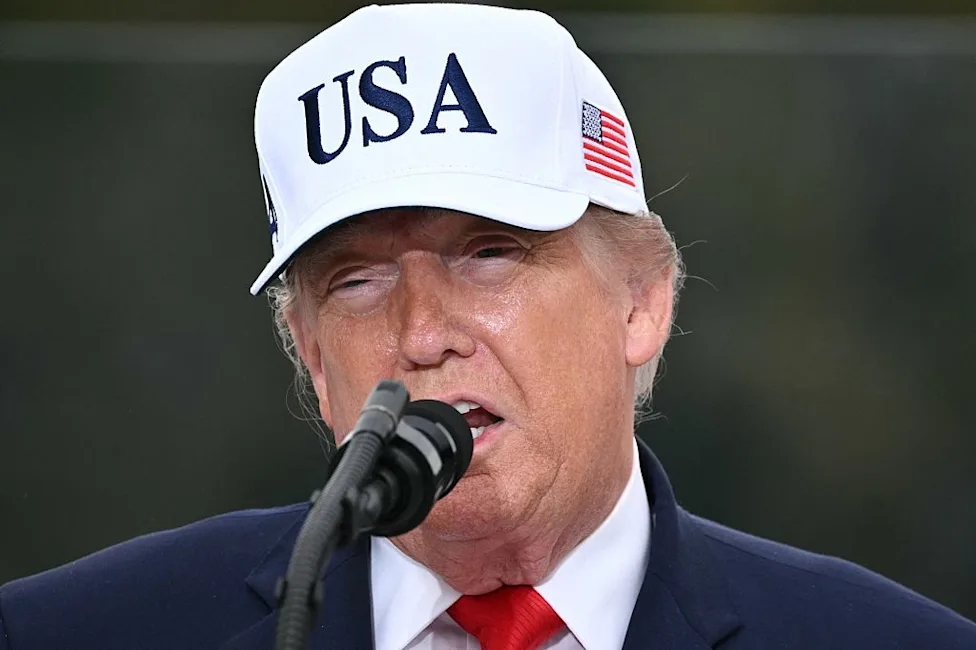


President Donald Trump’s approach to Israel has come under renewed scrutiny following major Republican losses in the November 3 midterm elections. The results have intensified debate within the Republican Party over continued U.S. aid to Israel, the economic impact of the war with Iran and whether the country’s foreign policy aligns with Trump’s “America First” agenda.
On Election Day, Donald Trump announced that he had reached a deal to end U.S. aid to Israel by the end of the year, arguing that the country was financially strong enough to stand independently. However, as the scale of Republican losses became clear the following day, questions about America’s relationship with Israel emerged as a major concern among GOP leaders.
The elections also brought several Democrats critical of Israel into Congress, highlighting a broader shift in American political opinion. The longstanding bipartisan support for Israel has weakened following the October 7, 2023, Hamas attack, which killed approximately 1,200 people and resulted in 251 hostages, and Israel’s subsequent military response in Gaza, which has killed tens of thousands of Palestinians.
Former Obama administration official Joel Rubin described the situation as the beginning of a new era, noting that both American political parties are reassessing their positions on Israel.
The war with Iran has further complicated the debate. The conflict, launched by the United States and Israel in February, has disrupted global oil markets and contributed to rising fuel prices. Trump acknowledged that Iran played a role in the Republican losses, while Vice President JD Vance directly blamed the war. Vance also said voters who had shifted away from Republicans identified ending the conflict, addressing living costs, prioritising America First policies and changing the relationship with Israel as key concerns.
Several prominent MAGA figures, including former Representative Marjorie Taylor Greene, Steve Bannon and commentator Tucker Carlson, have also criticised continued military and financial assistance to Israel. They argue that American resources should prioritise domestic needs rather than overseas conflicts. Trump similarly described Israel as a thriving country that no longer needed American assistance.
Recent surveys indicate that opposition to military aid extends beyond conservative circles. A Chicago Council on Public Affairs survey found that 56% of Americans supported reducing or ending military assistance to Israel, including 72% of Democrats, 65% of Independents and 30% of Republicans. Another poll found that 56% of MAGA supporters favoured placing conditions on aid to Israel.
Democrats are experiencing their own divisions over the issue. In Michigan, outspoken critic of U.S. military aid Abdul El-Sayed won a Senate seat after campaigning on prioritising domestic spending, including healthcare and education. In New York, three Democratic socialist candidates critical of Israel also secured victories. Meanwhile, Senator Jon Ossoff of Georgia maintained a more moderate position, supporting certain Israeli defence systems while opposing some offensive weapons transfers.
The results follow a July vote in which nearly half of House Democrats supported an amendment seeking to cut off aid to Israel, although the proposal failed.
Political strategist William F.B. O’Reilly warned that growing isolationist attitudes within the Republican Party could damage relations between the United States and Israel. Meanwhile, Rubin said the election victories demonstrated that both pro-Israel and anti-Israel groups within the Democratic Party had gained political ground.
Although foreign policy disagreements have become increasingly important, economic concerns remain a major factor behind voter decisions. The midterm results have nevertheless exposed growing divisions across both parties, raising questions about the future of America’s longstanding relationship with Israel and its continued military and financial support.